What we discuss in this episode
Pardon To Tu – how to build a cult bar in Warsaw and survive 14 years in gastronomy
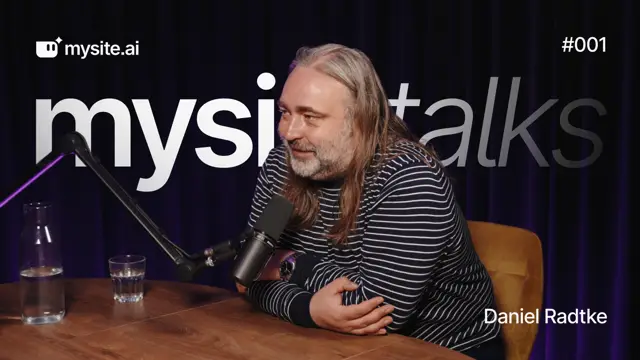
In a gastronomy world where most venues close within the first two years, Pardon To Tu is a true phenomenon. This Warsaw bar, bookstore and music club in one has been running continuously since 2011, attracting both students and seventy‑year‑olds. In a conversation with Daniel Radtke, co‑founder of this iconic place, we uncover the secrets of surviving in one of the toughest industries.
For restaurateurs looking for ways to do effective marketing in gastronomy, the story of Pardon To Tu is a strong case study of building a brand organically, without massive ad budgets.
From a logistics corporation to your own bar – Daniel Radtke’s uncommon path
Daniel Radtke is not a typical restaurateur. His route into gastronomy went through eight years in a German logistics corporation, Berlin’s punk scene and Warsaw theatre. This unusual combination shaped Pardon To Tu’s philosophy.
Experience in logistics taught me organization – managing people, planning, process optimization. It helps me a lot now when running a venue with a 20‑person team.
Working behind the bar in Germany as an eighteen‑year‑old planted the dream of having his own place. The punk scene shaped a freedom‑first approach to business – in Pardon To Tu there are no bouncers at the door; anyone can walk in at any time.
How much does it really cost to open a bar in central Warsaw?
Daniel shares numbers that can surprise first‑time owners. The first location at Plac Grzybowski in 2011 cost under PLN 100,000. The key was a DIY mindset – they did most of the renovation themselves, outsourcing only what required certificates: ventilation, the gastronomy design, fire safety tests.
The current location is a different scale. Building a mezzanine, separate ventilation, full reconstruction – an investment many times larger than the first place. Daniel admits plainly:
Without the experience from the first venue, I would never have dared to make an investment like this.
Owners who want to better control finances and start counting in gastronomy will find confirmation here: success requires a systematic approach to costs.
Word of mouth vs online ads – what really works in gastronomy
In the era of social media and paid ads, Daniel bets on something much older: word of mouth. A breakthrough for Pardon To Tu was cooperating with the Singer Festival at Plac Grzybowski. For a week, thousands of people passed through the venue – and many returned later with friends.
Each person from a big booking will come back a month later and make their own booking. That’s how it fuels itself.
The key strategy? No service fee for large reservations, while competitors charged it already at four people. That made Pardon To Tu stand out and attracted groups of friends, company meetups, birthdays.
More on marketing strategies in HoReCa can be found in our conversation with Tomasz Chojnacki, a hotel marketing expert.
Location in gastronomy – why you need 150% certainty
One of Daniel’s most important lessons is about choosing a location. Before opening the first bar, he viewed 60 different places. Before moving to the current site – another 40. That’s not chance; it’s strategy.
If you don’t have 150% certainty about the location before you sign the lease, don’t open there. You need that certainty before opening, not after.
Lease length matters too. The first 3‑year lease proved a mistake – in gastronomy, ROI begins only after 3–5 years. Today, Daniel wouldn’t sign for less than 10 years.
How the pandemic changed running a venue in Poland
COVID‑19 tested the entire industry. Pardon To Tu used a smart legal loophole – as a bookstore it could remain open while restaurants were closed. They also added delivery and an off‑premise alcohol license.
We didn’t build enough financial backup for a situation like this. Without support programs like PFR or ZUS relief, everyone would have gone under.
This lesson applies to every owner: cash reserves for surprises are not a luxury. More on why half of restaurants don’t make money is discussed by Jakub Madej in another episode.
Building guest relationships – the secret of repeat customers
Daniel and co‑owner Magda are present in the venue every day. It’s intentional: regulars see them and feel it’s still the same Pardon. That presence builds trust and loyalty.
When you walk in and I ask: double espresso coffee with oat milk, right? – and the guest sees I remember – that’s what makes people come back.
It’s not magic; it’s consistent relationship work. Everyone on the team knows Pardon To Tu isn’t fast food where the only question is ketchup or no ketchup. It’s a place where guests should be remembered.
AI in gastronomy – worth investing?
Daniel is optimistic about technology. He uses ChatGPT to shorten artist bios before concerts – a task that used to take hours now takes minutes.
At a Makro workshop he realized many restaurateurs already use robots to bring food to tables.
At the same time Daniel is realistic: AI won’t replace waiters or chefs. Its value is in automating admin, accounting, communication – not in direct service.
For restaurateurs interested in deploying AI solutions for gastronomy, mysite.ai offers tools tailored to HoReCa needs.
The key to success in gastronomy – 14 years distilled
The story of Pardon To Tu is not an easy‑success story. It’s 14 years of daily work, three locations, hundreds of concerts, a pandemic, and learning from mistakes. Daniel sums up his experience in a few key points:
Certainty of location – don’t open if you’re not absolutely sure. View dozens of options before signing.
Long‑term thinking – a lease for at least 10 years; ROI after 3–5 years. Gastronomy is a marathon, not a sprint.
Direct contact – be present, build relationships, remember preferences. That’s why people return.
Learning from mistakes – make mistakes in the first two years when the stakes are lower. Later, minimize risk.
Financial backup – reserves are a necessity. The pandemic proved it.
Authenticity – be yourself. Pardon To Tu has Dżem and Pink Floyd on the wall because Daniel likes them – not because it’s trendy.
More inspiring stories from gastronomy can be found in the mysite talks podcast.