What we discuss in this episode
Jakub Madej: the post‑COVID “cake”, food cost and recipes. How to stop guessing in gastronomy
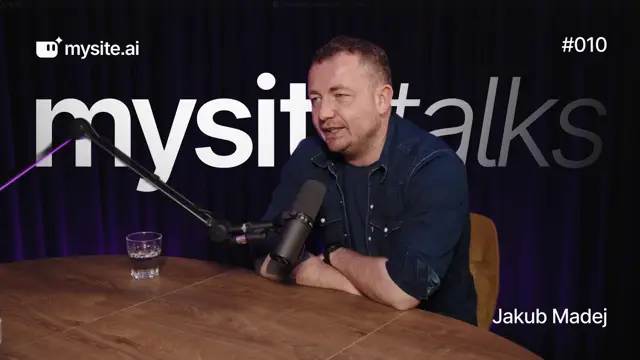
Episode 010 of mysite talks is a conversation with Jakub Madej – someone who lives in two worlds at once: multi‑generation gastronomy in the Tri‑City (from family catering, through first restaurants, to a network of venues) and technology.
Jakub co‑created Chefit – a tool designed to organize what in many restaurants still runs “by feel”: inventory, recipes, food cost, labor ratios, and loss control. This episode is about why today gastronomy often loses not on taste, but on math.
From family catering to a venue network: when craft meets process
Jakub started on the ground level: seasonal work on Monte Cassino in Sopot, 14‑hour shifts, collective catering for 700–800 people a day. Then came the first restaurant, concept change to Neon, scaling into food halls, and an external investor.
The key lesson: the more locations, the less “manual steering” – and the more you need standards and processes.
The revenue “cake” after COVID: why profitability falls even when sales grow
Jakub uses a strong metaphor: revenue is a cake. After COVID, hyperinflation and rising minimum wages changed everything. Even if revenue grows, the profit slice shrinks.
The two main margin eaters:
- food cost
- labor ratio
Chefit: less time at the computer, more time with guests
Chefit aims to automate inventory and reporting: invoices pulled automatically, machine learning that “remembers” decisions, and a target of 30–60 minutes a day of managerial work on numbers.
“How not to lose PLN 1,000 on chives”
A great example of invisible leaks: in a food hall location (~PLN 150k net monthly revenue), numbers didn’t match. The fix was a process change and a machine purchase that paid back in ~4.5 weeks.
90% of restaurants have recipe errors
Without monitoring, it’s easy to build recipes disconnected from reality. You must include oil, waste, losses. Onboarding takes 2–3 months because recipe “real‑ification” comes first.
POS is a must have
Without POS you don’t have variants and sales analytics. With subscriptions at PLN 50–150, skipping POS is asking for trouble.
Shorter menu, more sense: top dishes drive sales
Top 5 dishes often generate 20–40% of sales; in one case one dish in four variants did 50%.
Example: pad thai.
Instead of “revolution”, do evolution: change ~20% of the weakest part of the menu and push bestsellers in marketing.
Pricing: manage cost first, reach into the guest’s pocket last
Food cost is cost of production + selling price. Count net to net (VAT is not yours). First manage costs (supplier pricing, monitoring, buying groups), then raise prices if necessary – without dropping quality.
From relationship business to process business
Scaling means switching to a process‑dependent organization. And as Jakub says: you can be afraid and still do it.
Marketing and data: promise must match operations
Top Chef is a “marketing trampoline” for 2–3 months – then execution matters. Marketing should amplify what already sells and is profitable.
If you want consistent communication (push bestsellers, work on reviews, plan content without bursts), mysite.ai helps keep regularity.
To make digital word of mouth work:
For measurement:
What to watch next
- KPIs and hard rules: Jacek Czauderna
- Revenue‑driving marketing: Michał Kowalski
- Reels + Excel + promise: Szymon Czerwiński
- Kitchen delivering the promise: Krzysztof Konieczny
More talks: mysite talks.